

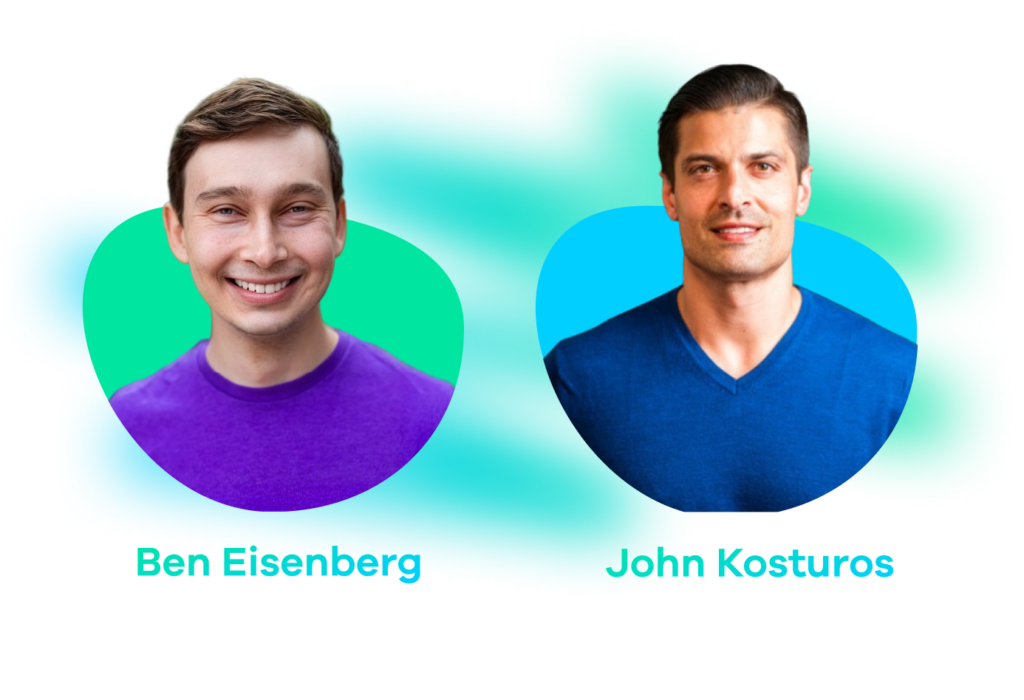
Inside People Data Labs with Ben Eisenberg, Chief Executive Officer

01 · About This Episode
People Data Labs is one of the most widely used workforce data providers in the market, and most end users have never heard of it by name. That is by design. In this episode of the SpringDB Data Exchange, John Kosturos sits down with Ben Eisenberg, Chief Executive Officer of People Data Labs, to explain how a company with no software product of its own became the data foundation behind platforms across recruiting, sales, marketing, and investment research.
Ben walks through the three joinable datasets that power People Data Labs, why not having a software product is a strategic advantage, how job postings quietly reveal hiring signals and budgets, and why every company is becoming a data company as artificial intelligence lowers the barrier to building in house.
About People Data Labs
People Data Labs is a workforce data provider that builds high quality person, company, and job posting datasets and delivers them to the platforms and teams that build on top of them. Rather than operating a software product of its own, People Data Labs focuses on clean, compliant, and connected data, joining resumes, work history, education, skills, and contact information to company and job posting records on a persistent company identifier. The core resume dataset covers roughly 800 million profiles, supported by an identity graph of approximately 2.1 billion identities. Built over more than a decade, People Data Labs delivers through both API and flat file, integrates with platforms such as Snowflake, Databricks, and S3, and maintains a strong focus on global compliance, including GDPR.
02 · What You Will Learn
TAKEAWAY 01
Why Pure Data Beats Owning a Software Product
Why People Data Labs deliberately has no user interface, and how that decision makes platforms far more comfortable building on the data without competing against the vendor behind it.
TAKEAWAY 02
How to Join Person, Company, and Jobs Data
How three separate datasets are made to talk to each other on a single persistent company identifier, and why joinable data creates a more complete picture of the workforce than any one table alone.
TAKEAWAY 03
The Hiring Signals Hidden in Job Postings
How daily job posting data surfaces deterministic signals, from hiring intent and budget ranges to the specific technologies a company is using, and why timeliness matters so much for this dataset.
TAKEAWAY 04
API Versus Flat File Delivery
When teams should start on a consumption based API and when they should graduate to a flat file, plus the duplication and matching logic that buyers often do not anticipate when they take on raw data.
TAKEAWAY 05
How Data Pricing Actually Works
Why data pricing is so different from software pricing, how consumption and all you can eat models compare, and how buyers and providers come together on the value of a dataset.
TAKEAWAY 06
How to Evaluate Data Quality and Coverage
The role of golden records, record linkage, and benchmarking in keeping a dataset clean, and an honest look at where global coverage is strongest and where it thins out, with the reminder that the use case decides everything.
03 · Who Should Listen
Product Teams and ISVs
Building applications on top of third party data and wanting a reliable foundation rather than collecting and cleaning it themselves.
Data and Platform Engineers
Responsible for integrating, joining, and maintaining large datasets, and evaluating delivery through API, Snowflake, Databricks, or S3.
RevOps and Growth Teams
Putting workforce and company data to work in the go to market stack, often through tools that wrap providers like People Data Labs.
Data Buyers and Procurement Teams
Evaluating data vendors and wanting to understand what separates high quality, well linked data from a raw public data dump.
Founders and Enterprise Builders
Weighing the build versus buy decision as artificial intelligence lowers the barrier to creating data products in house.
Analysts and Investment Researchers
Using workforce and hiring signals as alternative data, where timeliness and coverage directly shape the quality of the insight.
04 · Topics and Timestamps